Anion Gap Calculator for Clinical Decision Support
How the Anion Gap Assesses
The anion gap is a calculated value that assists clinicians evaluate electrolytes and identify indicators of metabolic acidosis. It represents the relationship between measured cations and measured anions in the serum chemistry panel, mainly using sodium, chloride, and bicarbonate. Because not all charged particles are directly measured, the anion gap gives indirect insight into unmeasured anions and broader acid-base disorders.
In practical terms, an elevated or reduced anion gap can guide clinical assessment when reviewing an electrolyte panel. It supports acid-base interpretation by helping clinicians recognize whether the body is accumulating acids, depleting bicarbonate, or dealing with another metabolic derangement. This makes the anion gap especially useful in laboratory interpretation, where small patterns can point toward important diagnoses.
The concept is straightforward: the gap estimates the difference between what is measured and what is expected in the bloodstream. When the balance shifts, the result can indicate an electrolyte imbalance or a disorder that needs more focused evaluation. In that sense, the anion gap serves as a quick form of diagnostic support that fits naturally into a larger diagnostic workflow.
How to Work With an Anion Gap Calculator
An anion gap calculator is a useful resource for rapid calculation during emergency evaluation, ward review, or internal medicine review. It helps clinicians enter key lab values and obtain an answer without manual arithmetic, reducing the chance of error during busy decision-making. Most calculators calculate with sodium, chloride, and serum bicarbonate, and some also support inclusion of potassium.
To use the calculator, record the patient’s measured lab values from the chemistry panel. The result can then be compared with the expected reference interval or local reference range. A value outside the usual range may trigger further clinical assessment for metabolic acidosis, a hidden acid load, or a relevant electrolyte disturbance.
Including potassium is optional in many settings. Some formulas exclude it because potassium is present in much lower concentration than sodium, but other clinicians choose the potassium-inclusive version for a more complete picture of anion concentration. What matters most is consistency: apply the same method when trending results over time.
The calculator is most valuable when combined with the rest of the chart. For example, if the serum bicarbonate is low, the anion gap can help separate a true high-gap process from a normal-gap disorder. If the pattern is unexpected, the calculator becomes part of a broader laboratory interpretation workflow rather than a stand-alone answer.
Anion Gap Formula
The typical anion gap formula is usually shown as:
anion gap = sodium − (chloride + bicarbonate)
With potassium added, the formula becomes:
anion gap = sodium + potassium − (chloride + bicarbonate)
These expressions estimate the disparity between measured positive and negative ions in the blood. The outcome offers a useful screen for hidden acids and other unmeasured anions. In many clinical settings, the potassium-free formula is used because it is simpler and widely used in routine serum chemistry reporting.
A corrected anion gap is often necessary when albumin is abnormal. Albumin is a major unmeasured anion, so low albumin can make the apparent gap look falsely normal or low. This is why albumin correction is crucial when interpreting results in patients with malnutrition, chronic illness, liver disease, or inflammation.
The idea of a normal anion gap depends on the assay used by the laboratory and the local reference range. Different analyzers and methods can yield slightly different values, so clinicians should assess the result in context rather than rely on one universal cutoff. A calculator that incorporates the correct laboratory method supports diagnostic support and lowers misclassification.
Reading High Anion Gap Findings
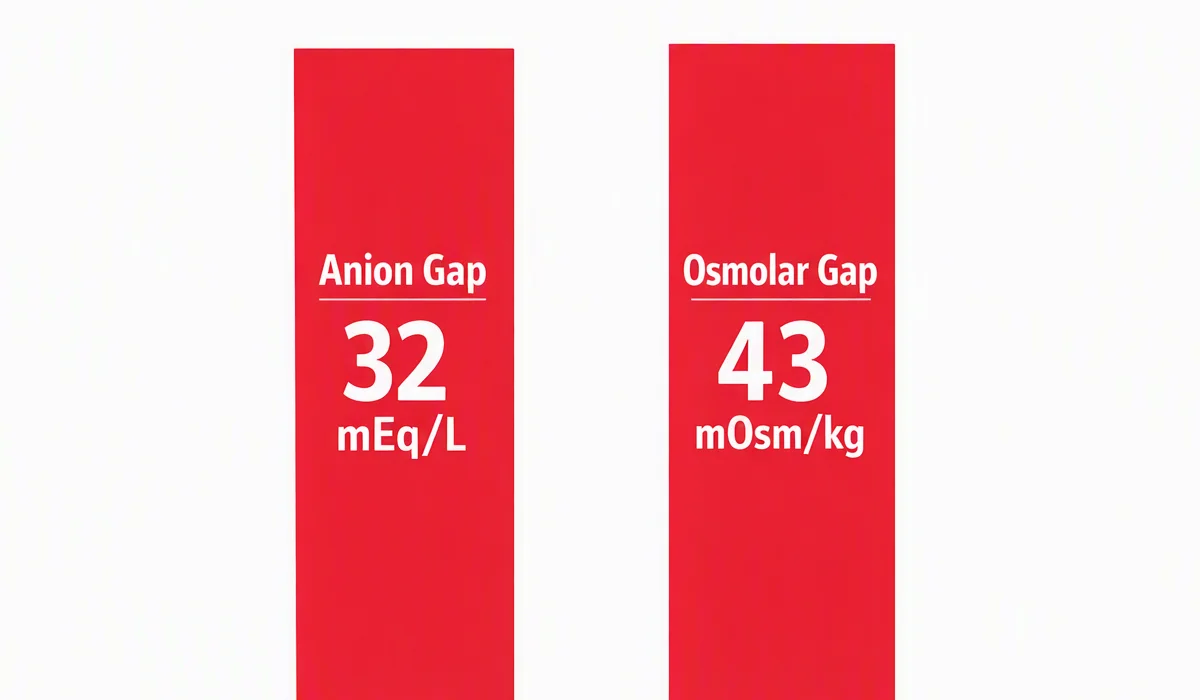
A high value commonly points toward high anion gap metabolic acidosis. In this case, the body has accumulated acids that are not separately measured on the chemistry panel, causing the calculated gap to increase. This picture commonly signals clinically important metabolic acidosis and warrants prompt attention, especially when paired with symptoms, hemodynamic instability, or worsening mental status.
One major cause is lactic acidosis, where lactate builds up because of tissue hypoperfusion, sepsis, hypoxemia, seizures, or severe physiologic stress. Another common cause is ketoacidosis, which may develop in diabetes, starvation, or alcohol-related illness. In both cases, the calculator helps quantify the acid-base pattern and enhances faster clinical decision support.
Renal failure is another classic contributor. When kidney function declines, acids are retained and normal buffering capacity is reduced. The result can be a rising anion gap along with other changes in the metabolic profile. In these cases, the calculator helps distinguish kidney-related acid retention from other causes of acid-base disorders.
High-gap results should always be interpreted with the full clinical picture. A single number does not diagnose the underlying disorder, but it can strengthen the case for urgent risk stratification, additional labs, blood gas testing, and a focused review for toxic exposures, ischemia, or severe dehydration. Used this way, the calculator becomes a useful part of clinical assessment rather than just a mathematical tool.
Understanding Expected or Reduced Anion Gap Results
A normal anion gap metabolic acidosis often suggests loss of bicarbonate or limited acid processing without a major rise in hidden acids. Typical examples include gastrointestinal bicarbonate loss and certain renal tubular problems. Here, the calculator remains valuable because a normal gap can help narrow the differential instead of ending the evaluation.
A reduced anion gap is less common, but it should not be ignored. The most frequent explanation is hypoalbuminemia, since reduced albumin lowers the pool of unmeasured anions. This can hide a clinically important disturbance if the result is not adjusted with a proper corrected anion gap. In patients with chronic disease or poor nutritional status, albumin correction is often essential.
Another important cause is testing error. Sample problems, analyzer issues, contamination, or transcription mistakes can produce misleading results. If the number does not fit the clinical picture, retesting is appropriate before making major decisions. A low or unexpectedly normal result should also prompt review of the overall electrolyte pattern and the patient’s acid-base status.
Because the anion gap is derived from measured values, small analytic differences can have a greater effect than expected. This is why clinicians should compare the number against the laboratory’s reference interval and review trends over time. A normal gap does not always mean the patient is stable, and a low value can sometimes be the earliest clue to a broader laboratory or physiologic issue.
Medical Clinical Decision Support Applications
This anion gap is a valuable element of clinical decision support because it converts standard chemistry data into usable information. In emergency medicine, it helps quickly detect high-risk patients with unexplained metabolic acidosis. In critical care, it aids serial monitoring of acid-base status and supports track response to treatment over time.
For instance, a patient with altered mental status, hypotension, or tachypnea may have a mild acid-base problem that is not apparent from the chart alone. A fast anion gap calculator result can guide the next step in the workup process, whether that means ordering lactate, ketones, kidney function, or a blood gas. This is where the tool delivers genuine diagnostic support rather than simple educational value.
In usual inpatient care, the calculator can help distinguish whether a falling bicarbonate reflects a high-gap process or a normal anion gap disorder. That distinction matters because it informs the differential diagnosis and determines what more workup is needed. When built in into daily review of the electrolyte panel, the calculator supports more accurate laboratory interpretation and more confident decision-making.
The anion gap is also helpful in risk stratification. A rising gap may suggest worsening illness even before symptoms become severe. Likewise, a low or corrected-normal value can comfort clinicians that the apparent disorder is not as severe than it first appeared, provided the rest of the assessment is concordant.
Constraints, Traps, and Best Practices
A key limitation is the need for albumin correction. Since albumin is a major unmeasured anion, low levels can hide an elevated gap. When correction is skipped, the clinician may miss the severity of the disorder. Always review albumin when the anion gap seems discordant with the patient’s presentation.
Another pitfall is overreliance on a single reference range. Various laboratories use different analyzers and reporting conventions, so a result should be interpreted in the context of the local assay. A result may appear abnormal in one place yet fall within the expected range elsewhere. That is why the best practice is to combine the calculator with the laboratory’s own reporting framework.
A mixed acid-base disorder can also make harder interpretation. A patient may have both a high-gap process and a second disturbance that partially offsets it, making the bicarbonate or pH seem less striking than expected. In these cases, the calculator is only one part of the analysis and should be paired with blood gas data, clinical context, and serial trends.
Repeat testing is warranted when the result conflicts with the clinical picture or when there is concern for laboratory error. Rechecking the chemistry panel can prevent misclassification and unnecessary treatment. Best practice is to review sodium, chloride, bicarbonate, potassium, and albumin together, then interpret the result within the broader picture of acid-base disorders and the patient’s overall condition.
The best results come from using the anion gap as part of a structured review: check the lab values, assess albumin, consider the reference range, and then connect the pattern to the likely diagnosis.
FAQs About the Anion Gap Calculator
What is an anion gap calculator used for?
An anion gap calculator is used to aid clinical decision support by rapidly estimating the anion gap from routine lab values. It helps clinicians evaluate metabolic acidosis, spot possible unmeasured acids, and structure the differential for acid-base disorders. It is especially valuable during chart review, emergency assessment, and ongoing laboratory monitoring.
How do you calculate the anion gap from lab values?
The most common anion gap formula is sodium − (chloride + bicarbonate). Some versions also include potassium, using sodium + potassium − (chloride + bicarbonate). The calculator uses the patient’s lab values from the chemistry panel to perform a fast, consistent gap calculation.
Why do you correct the anion gap for albumin?
You correct the anion gap for albumin because albumin is a major unmeasured anion. If albumin is low, the measured gap may look falsely normal or low. A corrected anion gap gives a more precise picture of the true acid-base status, especially in patients with hypoalbuminemia.
What does a high anion gap mean clinically?
A high result toxic alcohols and high anion gap suggests high anion gap metabolic acidosis, which often reflects accumulation of acids such as lactate or ketones. Common causes include lactic acidosis, ketoacidosis, and renal failure. The finding should prompt additional clinical evaluation rather than be interpreted in isolation.
Can a normal anion gap still indicate a serious disorder?
Yes. A normal anion gap can still occur in significant illness, including normal anion gap metabolic acidosis. It may also be seen when a high-gap process is masked by hypoalbuminemia or when a mixed disorder is present. That is why clinicians should consider the full clinical context, the serum bicarbonate, and the possibility of laboratory error before concluding the evaluation.