Calculating Anion Gap in mmol/L?
What’s the Anion Gap?
The anion gap is a calculated value used to assist interpret electrolytes in a blood chemistry panel. It provides clinicians and readers a quick way to check acid-base balance by comparing the main measured positively charged and negative particles in the blood.
In practical terms, the anion gap helps estimate the amount of unmeasured anions in the bloodstream. It is not a direct lab measurement. Instead, it is a result calculation based on common serum electrolytes reported on an electrolyte panel, especially sodium, chloride, and bicarbonate.
This makes the anion gap a useful diagnostic aid when reviewing lab results and deciding whether an acid-base disorder may be present. A quick blood test interpretation can show whether the pattern is consistent with a normal anion gap, high anion gap, or low anion gap.
Anion Gap Formula in mmol/L
The basic anion gap formula in mmol/L is straightforward:
Anion gap = sodium - (chloride + bicarbonate)
Some laboratories also list the values in mEq/L, but for typical clinical use, the numeric result is usually the same when the electrolytes are measured in standard millimole-based reporting. This is why many people can use an anion gap calculator without worrying too much about the unit label, as long as the lab values match the calculator’s expected format.
This formula uses the major measured ions:
- Sodium as the main measured cation
- Chloride as a key measured anion
- Bicarbonate as another key measured anion
Because the calculation is based on measured ions, it helps identify shifts in the balance of charged particles. This is why the anion gap is often reviewed alongside other serum chemistry findings when evaluating acid-base balance.
How to Determine Anion Gap Step by Step
To determine anion gap correctly, you need the exact serum sodium, serum chloride, and serum bicarbonate results from the identical lab draw if possible. Whether you use a calculator or doing the math by hand requires the same steps.
Below is a basic workflow:
- Identify the serum sodium value.
- Locate the serum chloride value.
- Find the serum bicarbonate value.
- Combine chloride and bicarbonate together.
- Subtract that total from sodium.
Sample calculation:
If the serum sodium is 140 mmol/L, the serum chloride is 104 mmol/L, and the serum bicarbonate is 24 mmol/L, then:
Anion gap = 140 - (104 + 24)
Anion gap = 140 - 128 = 12 mmol/L
This calculation example shows why an anion gap calculator can be useful: it reduces arithmetic mistakes and offers quick clinical interpretation when reviewing electrolyte values.
Helpful tip: When comparing multiple lab panels, always verify that the same unit system is used and that the values come from the same blood chemistry panel.
Normal Anion Gap Values and Measurements
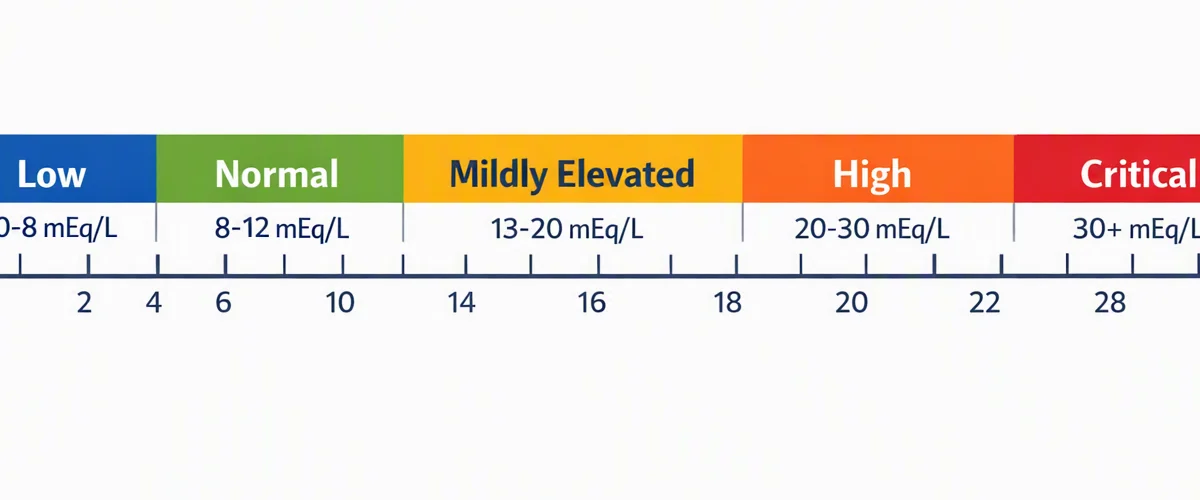
This normal range for anion gap is determined by the laboratory’s reference interval and the way the test is displayed. In many settings, the typical reference range is approximately 8 to 12 mmol/L when potassium is not included, though some labs may use different cutoffs.
Some labs present the result in mEq/L, and the number may appear much the same in routine use. Still, the best practice is to check the lab’s own reference interval rather than depending solely on a generic range.
Why this matters:
- A value in the normal range does not always exclude an important issue.
- A result outside the expected reference range may suggest a true acid-base problem or a lab-related issue.
- Interpretation should always consider the full blood chemistry panel, not just one number.
The phrase anion gap in mmol/L is common in clinical discussions because it precisely matches many modern lab reports. Whether you see mmol/L or mEq/L, the key is to follow the lab’s own reference interval for reliable comparison.
What Is a Elevated Anion Gap Mean?
A high anion gap often indicates that there is excess acid in the blood, which can point toward a metabolic acidosis state. When this happens, the body has more unmeasured anions than expected, frequently because of the buildup of acid byproducts.
Common causes of a high anion gap include:
- Lactic acidosis, in which lactate builds up because tissues are not using oxygen normally or because of other metabolic stress
- Ketone-related acidosis, which can occur when ketone bodies rise significantly
- Additional causes of acidosis that increase acid load
In medical interpretation, the anion gap is one clue among several. A high result can support the idea of an acid-base problem, but it does not identify the exact cause by itself. This is why clinicians look at the full picture, including symptoms, glucose, kidney function, and other laboratory findings.
If you are using an anion gap calculator, a result above the lab’s expected range should prompt a careful review of the rest of the electrolyte panel and the patient’s context.
What Does a Reduced Anion Gap?
A reduced anion gap is less common than a raised one, but it can still be significant. One of the leading explanations is hypoalbuminemia, because albumin is a negatively charged protein that plays a role in the relationship of measured and unmeasured ions.
Other additional reasons for a low anion gap include:
- Decreased albumin levels
- Laboratory error or sample issue
- More rarely, abnormal shifts in measured ions or proteins
Because laboratory error can sometimes produce an unexpectedly low result, it is often wise to repeat the test or review the raw values before drawing conclusions. A single abnormal number should not be interpreted in isolation.
In many cases, the first question is whether the result is truly low or whether it needs to be adjusted for albumin. That leads directly to the idea of albumin correction.
How Serum Albumin Alters the Anion Gap
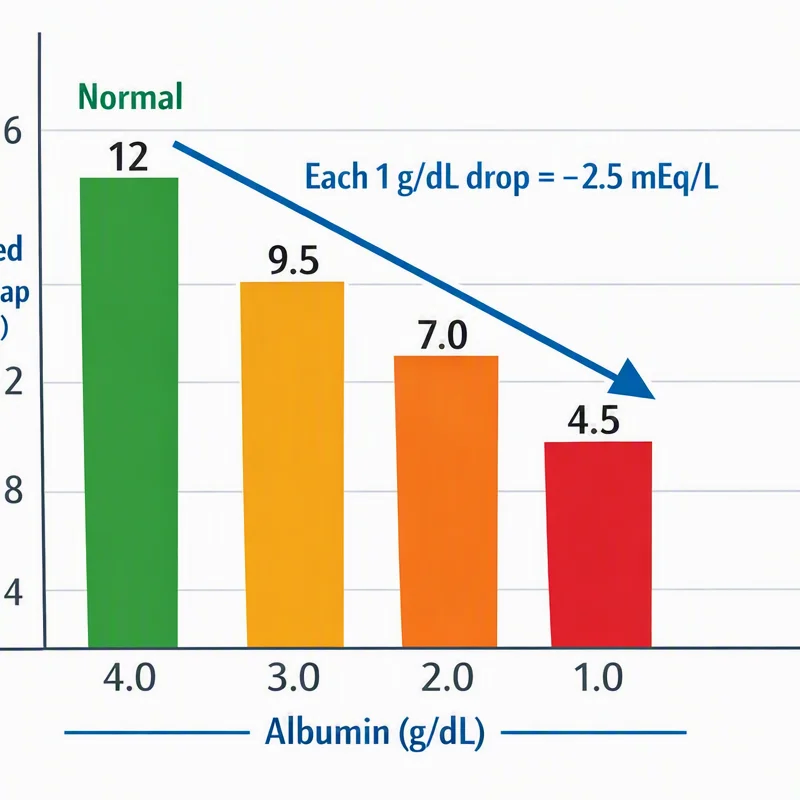
Correcting albumin is essential because serum albumin has a major effect on the calculated anion gap. Because albumin is a anionic protein, lower albumin often reduces the apparent calculated anion gap even when the underlying acid-base picture is not very different.
That is why clinicians often calculate a corrected anion gap. This helps make the result more meaningful when serum albumin is low, especially in patients with ongoing disease, inflammation, or poor nutrition.
One common method is to raise the anion gap upward when albumin is below normal. The specific correction formula can vary by institution, but the goal is the same: view the anion gap as if albumin were closer to a standard level.
Why this is important in practice:
- A low albumin level can make the anion gap seem deceptively normal or low.
- Corrected anion gap values can uncover hidden metabolic acidosis.
- Albumin correction enhances the accuracy of clinical interpretation.
When reviewing a result that seems not consistent with the patient’s condition, checking serum albumin is often a helpful next step. This is especially important when you are reviewing multiple lab results from the same blood chemistry panel.
When to Apply an Anion Gap Calculator
An anion gap calculator is particularly valuable when you want a quick and accurate result calculation from an electrolyte panel. It can reduce time and reduce manual math errors, especially when several values must be checked in a limited time.
You may want to rely on an anion gap calculator when:
- You are checking an electrolyte panel for signs of an acid-base disorder
- You need fast clinical interpretation of a blood chemistry panel
- You want to compare reference range values across different lab reports
- You are checking whether an abnormal result may represent metabolic acidosis
It is particularly useful when you need to compare serum electrolytes across repeated tests or when you want to understand the relationship between the numbers and the underlying physiology. A calculator is a helpful diagnostic aid, but the final meaning still depends on the full clinical context.
Common Mistakes When Calculating Anion Gap
Even though the formula is basic, there are several common mistakes that can affect blood test interpretation. Paying attention to details can increase the accuracy of the calculation and the reliability of the result.
- Units: Make sure you are using the correct unit system and comparing results in the same format.
- Potassium: Some formulas include potassium, while others do not. Using the wrong version can change the result.
- Measurement error: A specimen problem or analyzer issue can skew the numbers.
- Reference values: Always compare the result to the lab’s exact reference values, not just a generic range.
Another common issue is mixing results from different time points. If sodium, chloride, and bicarbonate were not measured from the same sample, the anion gap formula may not reflect the patient’s true status. That is why the best approach is to use the same serum chemistry set whenever possible.
In conclusion, https://jsbin.com/zaviqudefo keep in mind that the anion gap is only one part of the larger clinical assessment. It should be evaluated alongside symptoms, follow-up testing when needed, and other markers relevant to acid-base status.
FAQs
How is calculated anion gap in mmol/L?
Follow the anion gap formula: sodium minus (chloride plus bicarbonate). Plug in the serum sodium, serum chloride, and bicarbonate level values from the lab report, then deduct the sum of chloride and bicarbonate from sodium. The final result is usually reported in mmol/L.
What is the normal anion gap range in mmol/L?
The normal measurements depend on the lab’s reference window, but many labs use a reference range of about 8 to 12 mmol/L when potassium is not included. Always review the specific lab report because the normal range can vary slightly.
Why is albumin correction important for anion gap?
Albumin correction matters because albumin is a major negatively charged plasma protein. When blood albumin is low, the anion gap may appear falsely low or normal. A adjusted anion gap gives a more accurate view of the acid-base status and improves clinical interpretation.
What may a high anion gap indicate?
A elevated anion gap often points to a metabolic acid state caused by extra acids or unmeasured anions in the blood. Common causes include lactic acid buildup and ketoacidosis. It is a helpful clue, but it should always be interpreted with the full clinical picture.
Must potassium be included in the anion gap formula?
That depends on the formula used by the lab or calculator. Some versions include potassium, while many common clinical calculations do not. If you use an anion gap calculator, check whether the tool includes potassium so the result calculation matches the intended method and reference standards.